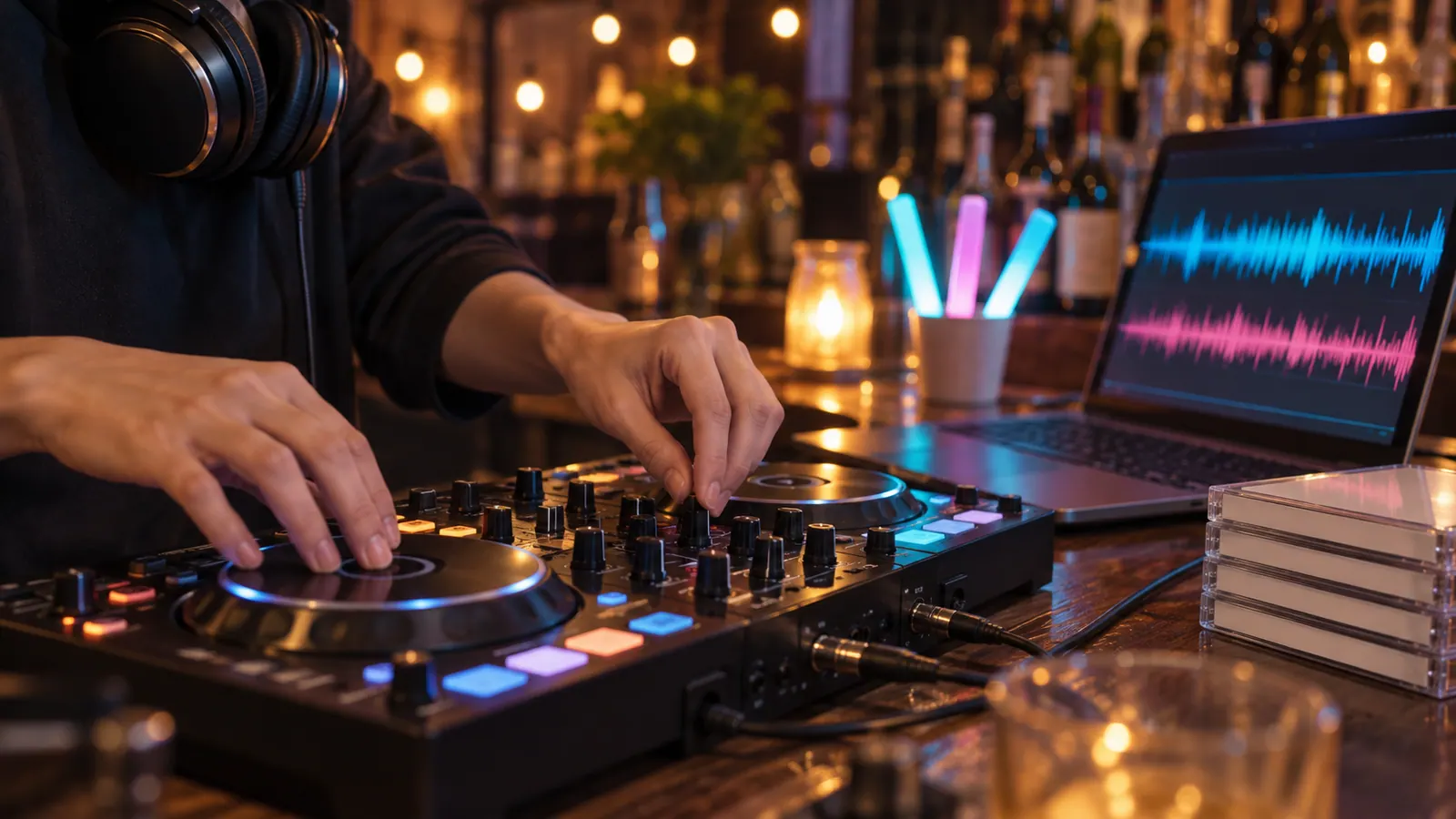
You’ve seen it. One second of an anime opening’s intro and the whole anikura floor throws its hands up. A lot of people watch that and think, “I want to be the one who pressed play.” I’ve been DJing in Tokyo for about four years, and that moment still feels great from inside the booth.
The general stuff — gear, why you should be a regular first — is in I want to be a DJ. Where do I start?. This piece is only the anisong- and Vocaloid-specific part: where tracks come from, whether you can play them in a club, how to mix songs that refuse to share a tempo, and where first sets happen.
What’s different about DJing anisong
At a house or techno night, most of the floor couldn’t name a single track. You carry them with sound. Anikura flips that. The floor knows the songs, and what they’re really reacting to is the show, the game, the year they were obsessed with it.
So an anisong DJ is holding everyone’s memories and handing them back at the right moment. Before technique, what matters is knowing who in the room lights up when a given song drops. If you’ve spent years with anime, games, or Vocaloid, you’re already halfway to the start line.
The other difference is how many doors there are. In the booking piece I said “DJs wanted” flyers basically don’t exist. The anisong and Vocaloid corner of Tokyo is the exception: plenty of DJ bars run open-deck or free-DJ nights. More on that below.
Getting tracks: you’re going to buy them
First wall: what you stream can’t be loaded into DJ software. You need actual files, which means buying music.
For anisong, that’s CDs and Japanese download stores. Anime OP/ED singles often include an off-vocal (instrumental) version — gold for transitions, since you can lay the next intro over a stretch with no vocals fighting it. Soundtracks and game OSTs are where your deep cuts live.
Used CDs are your friend, especially on a foreign card. Some Japanese download stores only sell to Japan-based accounts, but a used-CD shop in Akihabara will happily sell you a 2000s anime single for not much at all. Rip it, tag it, done.
For Vocaloid, start with the producers you love. Plenty of them sell albums on download stores, on BOOTH, or as CDs at doujin events. Whether a song you know from video sites is actually for sale varies by producer, so expect some digging.
Don’t rip audio off video sites. Rights aside, it sounds bad — maybe not on earbuds, but instantly on a club system. And organize as you go: playlists by series, era, and BPM, like building your own record shelves.
Can you legally play anisong in a club? The short version
Here’s only what I could confirm from the rights organizations’ own documents.
JASRAC’s tariff rules group live houses, discos, bars, and other businesses where guests eat, drink, or dance into a category called shakōba (社交場, roughly “social venues”). “Performance” there covers live playing and “record performance,” which JASRAC defines as performance using lawfully made recordings — so, a DJ playing purchased tracks. Its procedure guide says licensing is handled per performance location, with the venue’s operator as the contract holder. In other words, playing existing songs at a club or DJ bar works on top of the venue’s licensing arrangement.
JASRAC isn’t the only collecting society, either. NexTone manages song rights too, and its FAQ says it can only license works it actually manages. Each society has a searchable works database.
Your part as a DJ: use legitimately purchased files. Running your own night in a rental space, or uploading and streaming your mixes, is a different situation from playing inside a club — check with JASRAC or NexTone when that comes up.
Mixing anisong: assume the BPMs won’t cooperate
House DJs ride long blends at 120-something BPM. Try that with anisong and you’ll crash. Tracks run from the 130s to nearly 200, tempos shift mid-song, live drums drift. So anikura mixing leans on transitions that don’t need long overlaps.
The bread and butter is the cut-in: at the end of a chorus or after the first verse and chorus, you slam the next intro in. Anisong intros are built to hit, so that alone gets the floor going, and lots of DJs move on after the first chorus — close to the TV-size length everyone grew up with. Echoing or reverbing out and dropping the new intro into the tail is another staple that hides big BPM jumps. If two tracks sit at double and half tempo (180 and 90, say), you can sometimes actually beatmatch them.
Then there’s the anikura specialty: neta transitions, linking by reference. The next song picks up a word from the last one’s lyrics or title. Same voice actor. Same franchise, same broadcast season. Technically it’s still a cut-in, but when the reference lands, you hear the floor react. That’s when it gets really fun.
Watch out for call songs. Idol-anime tracks have spots where the floor is waiting to shout the call — cut there, or drop something on top, and you lose the room. Same with the final chorus everyone wants to sing. You can only make that call if you know the song, which is why listening hours matter so much.
For practice timelines and whether the sync button is okay (it is), see How much do I need to practice before my first DJ set?.
Classics vs. deep cuts, and reading the floor
Classics are the ones the whole room knows from the intro — think “A Cruel Angel’s Thesis” tier. Guaranteed reaction, but stack them and you get “this again?” Deep cuts — character songs, endings, soundtrack pieces, old game themes — make the people who know them lose it, but a run of them stalls the floor.
My rough habit: one deep cut between songs most people know. Early on, lean familiar. Later, once you can see how deep the people still on the floor go, dig more.
The main thing to read is which era the floor responds to. A room that erupts for 2000s shows and a room that erupts for the last few years are completely different nights, even under the same anikura banner. Your best intel is listening from the floor before your set: what the previous DJ played and where it landed. Also, don’t replay a track that’s already gone out that night — at a lot of anikura that’s treated as bad manners, so keep a note on your phone.
Where first sets happen: open decks and free-DJ nights
Just from event announcements we’ve picked up:
Kowloon (九龍) in Yushima has repeatedly announced free-DJ bar nights, saying DJs who play game music, 20th-century anime, and J-pop are welcome. Gluck (グリュック) in Hachioji runs a Friday session with a free DJ slot and welcomes walk-ins who bring their own gear. Gluck Zwei in Tachikawa has done an anime OP/ED-only B2B night that walk-ins could join. Vocabuki (ボカブキ) in Kabukicho has put out calls for late-night DJs and run nights with drop-in slots, and nagomix Shibuya once held an open call for DJs for a night themed on “Vocaloid of 2016.”
Every place runs it differently: a sign-up list, time slots, sometimes a fee for the person playing. The gear might be a controller, CDJs, or “bring your own.” Read the announcement or ask the staff first — even a simple “DJ dekimasu ka?” at the bar works. Bring a USB exported from your DJ software, plus headphones.
The best part of open decks is playing to strangers. You learn things home practice never shows you, like “oh, this track does nothing in this room.” And the regulars and owners at these bars are often organizers or DJs at anikura nights themselves, so “want 30 minutes at our event?” can come out of just being around. From there it works like the booking piece describes: keep showing up as a guest, and make it known you want to play.
To find nights, the anisong listings and Vocaloid listings update daily.
Quotas and pay, honestly
At small anikura nights, the usual deal is no fee: drink tickets, plus a small cut from guests who came in under your name (guest back). Some events set a guest quota — bring a certain number of people, or cover the difference yourself.
Quotas aren’t evil; they’re part of how small events stay alive. But you can, and should, ask about terms when you’re invited. Agree knowing the deal and there’s nothing to resent later. As for what headliners at big events make, only rumors circulate, so I’m not going to guess.
In the end, the floor is the shortest path
The anisong DJ path ends where every other one does: the person on the floor has the edge. Who lights up for which song is something you only learn by standing there as a guest.
If anikura itself is still new to you, start with the parent piece, What is anikura?. Leaning Vocaloid? Read the bokakura piece too.