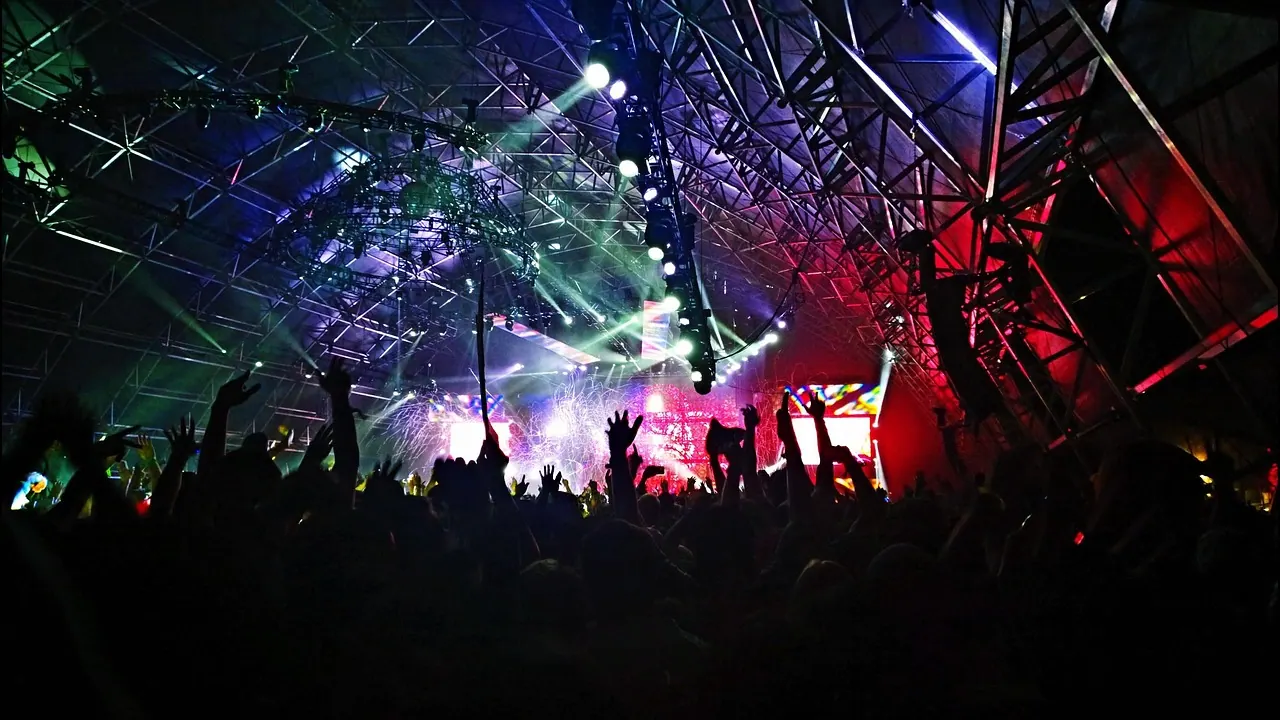
If you’ve spent any time in Tokyo’s club scene, you’ve probably seen flyers with “VOCALOID” or “39” on them and wondered what actually happens inside. The short answer: DJs play nothing but Vocaloid, the floor knows every word, and it works far better than it has any right to. The scene calls these nights bokakura (ボカクラ). This is your primer.
What a bokakura is
Mechanically it’s a normal club night — rotating DJs, a dance floor, a bar. The difference is the source material: Vocaloid tracks only, or at least Vocaloid at the center of gravity.
You’ll see the terms ボカクラ (bokakura), ボカロオンリー (“Vocaloid only”), and event names stuffed with “39” — a number pun on “Miku” that the scene never gets tired of. If a flyer has it, you know what you’re walking into.
People often lump these in with anikura — anime-song club events — and the scenes do overlap. But a Vocaloid-only night is its own thing. Some anikura have a Vocaloid segment; a bokakura is Vocaloid wall-to-wall, and in Tokyo right now that’s enough to fill a venue on a regular basis.
What actually plays
The range is wider than outsiders expect. Roughly four layers:
- The classics — songs that have been sung for a decade or more. The intro drops and the entire floor reacts within one second.
- The current generation — tracks that blew up recently or got a second life through Project SEKAI. This is where the younger crowd peaks.
- Producer-focused sets — a DJ dedicating a set to a single Vocaloid producer, or a night themed around one era.
- Remixes and hardcore edits — original songs rebuilt toward EDM or hardcore territory, usually deeper into the night.
The thing that surprises first-timers: original Vocaloid tracks work on a club system without any editing. They’re fast, dense, and detailed, and hearing them at club volume genuinely transforms them. “I know this song but I’ve never heard it before” is the standard first-visit reaction.
If you want to prepare, a handful of classics is enough — here’s how I think about pre-club listening. Nobody expects you to know everything.
The crowd and the vibe
Two things set bokakura apart from every other Tokyo club scene.
First, the floor sings. Not a few people mumbling — the room carries choruses together. That never happens at a techno night. Singing along is welcome; staying quiet is equally fine. You’ll calibrate within three minutes of walking in.
Second, penlights. Depending on the venue and event, parts of the floor light up and wave like an idol concert. Optional — about half the room is hands-free.
The crowd skews twenties, but the first Vocaloid generation is in their thirties now and they show up. If you’re worried about aging out, that concern is overblown here — more so than in most scenes.
Going for the first time
Money: same range as any Tokyo club night — entrance plus one drink, with smaller venues landing in the ¥2,000–3,000s. Details in what Tokyo clubs cost and how to read 1D/W/WO pricing.
Going solo: bokakura might be the easiest scene in Tokyo to attend alone. The music is the point, so solo attendance is unremarkable. More on that in the solo clubbing piece.
Timing: alongside all-nighters, this scene runs a lot of early-evening events that end before the last train. If it’s your first time, a day event is the low-stress entry.
Clothes: whatever you’d normally wear. Some people rep character shirts and merch; entirely optional.
Where these nights actually happen
Tracking Tokyo’s Vocaloid events daily, the pattern is clear — three venue types account for most of the calendar:
- Vocaloid-specialist venues: Kabukicho’s Vocabuki runs Vocaloid-centered programming near-weekly — we’ve logged over ten events there this summer alone. Highest hit rate if you just want to experience a bokakura this month.
- The anison institutions: Akihabara’s MOGRA is the historic center of anime-adjacent club culture and hosts recurring Vocaloid-only nights.
- Small-venue one-offs: organizer-driven Vocaloid-only parties pop up monthly at small venues around Shinjuku, Ryogoku, Shimokitazawa, and Shibuya. These you find by event, not by venue.
Any specific recommendation I write here goes stale in weeks, so the live answer is the Vocaloid events index — updated daily, filterable by date and area. Adjacent scenes worth a look: anison and VTuber events.
Do you need Japanese?
Less than you’d think, and here’s why: the shared language of a bokakura is the songs themselves. Nobody’s holding conversations on the floor anyway — it’s too loud for that everywhere in Tokyo — and the sing-along happens in whatever accent you’ve got. Plenty of international Vocaloid fans learned these songs phonetically years before setting foot in Japan; the floor doesn’t care.
Where a little Japanese (or a translation app) helps is logistics: door staff interactions, drink orders, and reading event flyers. Which brings us to —
Reading a bokakura flyer
Vocaloid event flyers are dense, but a few recurring terms unlock most of them:
- オンリー (only) — genre-locked night. ボカロオンリー means nothing but Vocaloid all night.
- 39 — Miku numerology (3 = mi, 9 = ku). Event names, dates, even pricing gags use it. March 9 (“Miku Day”) is the scene’s unofficial holiday, and the weeks around it are peak season.
- DJ / VJ lineup — bokakura commonly credit VJs (video jockeys) alongside DJs. Screen output is a bigger part of the show here than in most scenes, since every track has iconic visuals attached.
- 転換 (tenkan) — DJ changeover. Sets typically run 30–60 minutes, so if the current set isn’t yours, the sound changes soon.
- 物販 (buppan) — merch table. Some events sell original goods; cash is safer than cards at small venues.
Pricing notation (1D, W, WO) is the same as every other Tokyo club night — decoder here.
Timetable culture
One structural note that trips up people coming from Western club scenes: bokakura run on posted timetables, and people actually follow them. Attendees arrive for specific DJs, front-load their energy for a favorite set, and rest during others. Nobody side-eyes you for sitting out a set at the back — there’s usually somewhere to perch — or for arriving at 22:00 sharp because the DJ you follow opens the night. If you’ve read the piece on why arriving at opening time feels empty elsewhere, know that day-format bokakura are the exception: the room fills early because the timetable says so.
When to go
Bokakura happen year-round — as of this writing our index shows Vocaloid events on the calendar essentially every week — but the scene has a seasonal pulse worth knowing. Miku Day (March 9) is the big one: expect a burst of anniversary-flavored nights in the surrounding weeks. Big official Vocaloid happenings, like the annual Magical Mirai expo, also tend to ripple into the club calendar with themed nights and unofficial after-hours gatherings. And New Year’s countdown events get their Vocaloid editions too.
If none of those windows line up with your schedule, don’t overthink it — a regular weekend bokakura at a small venue is the same experience at four-fifths the crowd density, which for a first visit is arguably better.
Common misconceptions
“It’s just anikura, right?” — They’re neighbors, not twins. Anime-song floors light up on memories of a show; Vocaloid floors light up on the song itself. On the floor, that difference is bigger than it sounds.
“I don’t know enough Vocaloid to go.” — The classics stretch covers you, and the sing-along is an invitation, not a test. Waiting until you’re “ready” is how people never go. Go knowing five songs; leave knowing fifteen.
“It’s a kids’ scene.” — The first generation is past thirty. Age-wise you’ll blend in more easily here than at most Tokyo club nights.
The short version
- Bokakura = Vocaloid-only DJ nights, running somewhere in Tokyo essentially every week
- Sing-along culture and penlights; a few known songs is enough
- Cost, dress, and solo-friendliness: same as any club night or easier
- Find them via the specialist venue (Kabukicho), the institutions (Akihabara), or small-venue one-offs — live index here
If Tokyo clubs in general are still new territory for you, start with the first-timer guide, then come sing.